
Dietitian Natasha Mohan is one of the most influential and renowned nutritionist and dietitian, with over 3 Million Followers on YouTube and 200+ Million Views and with 10+ Years of Experience. Dietitian Natasha Mohan is a transformation expert, Motivational Speaker and Lifestyle Expert. She has touched million of lives. She specializes in Therapeutic Diets Like, PCOS/PCOD, Thyroid, Diabetes, Cholesterol, Blood pressure, and other lifestyle disorder.
Eat for strong bones as we complete our 20s because our bone health becomes more important than ever. Until age 30, the body builds bone faster than it loses it, but after this point, our bone density naturally begins to decline. This silent and gradual change increases the risk of weak bones, joint stiffness, fractures, and early signs of osteoporosis later in life.
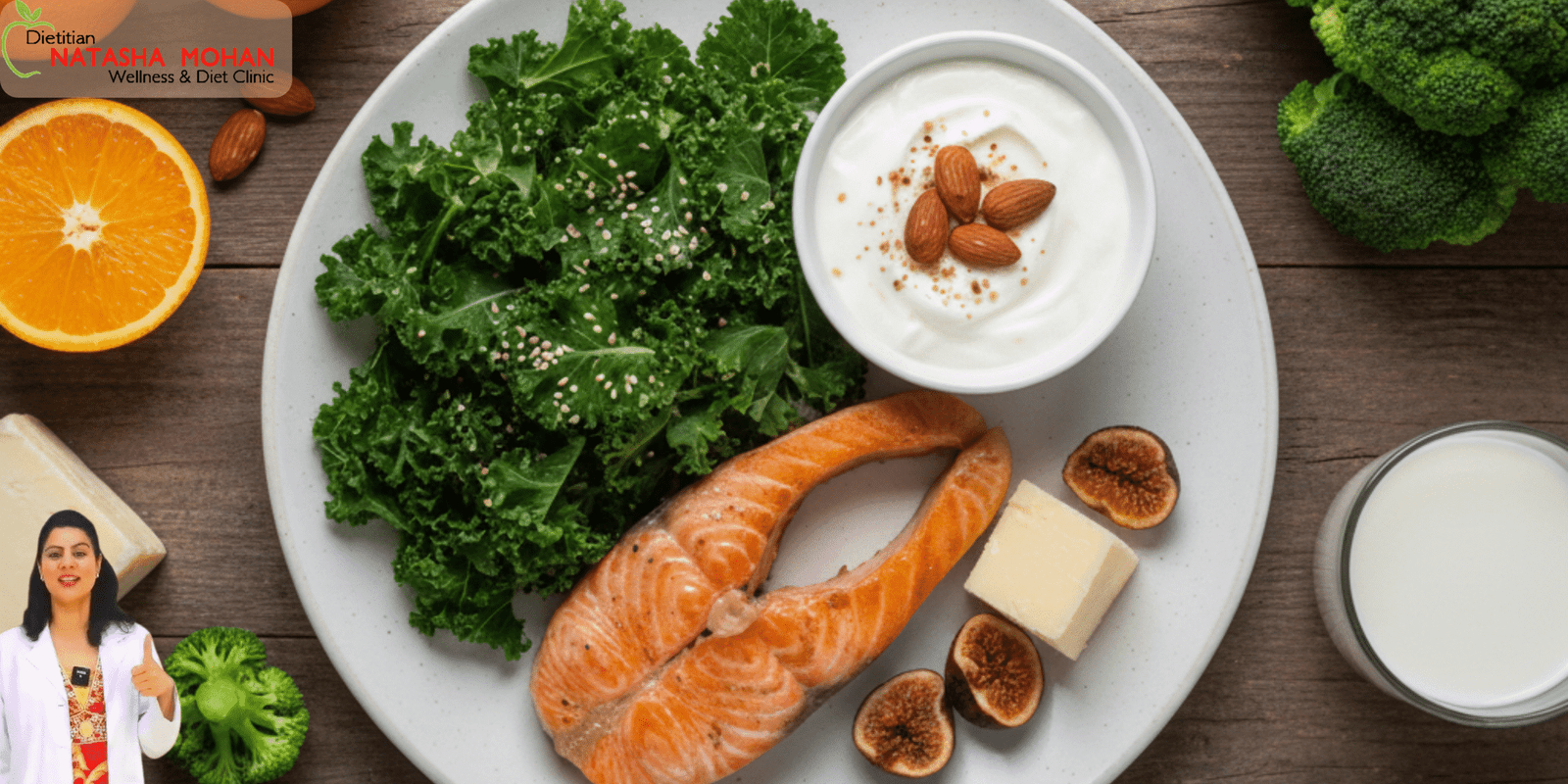
But here is good news what you eat plays powerful role that keep you bone health strong flexible and healthy you have seen multiple athletes and celebrity they still look like young just because of complete and nutritious diet with that balance of right amount of calcium, vitamin D, protein magnesium and antioxidants.
In this guide you will find what exactly need to eat after your 30s to maintain strong bones health. The simple nutrients that you ignore and daily habits that support long term bone health…. all are backed by science and easy to follow.
After the age of 30 our body’s natural bone building process start to slow down where bones become slightly thinner every year because that rate at which your body breaks down and old bone becomes faster that the rate at which it forms new bone.
Once calcium absorption slows, your body need additional nutritional support to keep your bone dense stable and strong calcium is not only factor for strong bone but full team of nutrient that work together.
1. Foundation Minerals – Calcium
Calcium is key foundation and building block of bones but after 30s you body need more consistent intake because of absorption drops.
Best sources:
2. Helping minerals – vitamin D
Vitamin D decides how much calcium that your body actually uses without vitamin D calcium stay unabsorbed and unused.
3. Why it matters after 30s
Best sources:
Stand in sunlight for 10 – 15 minutes with forearms and face exposed for better vitamin D synthesis.
How can we forget about protein if talking about building bone you don’t know but our 50% of bone structure is protein after 30, you also lose muscle mass (sarcopenia), which affects balance and increases the risk of falls.
Best Sources
Vitamin K2 – Prevent calcium from depositing in wrong places
K2 ensures calcium goes into the bones not into arteries or joints
Best sources
Omega – 3 fatty Acids – Reduce Bone Inflammation
Chronic inflammation accelerates bone loss where omega – 3 helps reduce it and improves joint lubrication.
Best Sources
After your 30s right food choices can significantly slow bone loss and even improves bone density by combining calcium, vitamin D, protein and other essential nutrients need every single day.
Ragi – one of best and richest natural source of calcium even high than milk it perfect for those who are lactose intolerance so they can include ragi in their diet for better bone strength.
How to include it
Milk, Curd And Paneer – All dairy foods offer highly bioavailable calcium meaning body can quickly absorbs it more than other source of calcium.
Eggs – Best combo containing because its yolks contain high amount of vitamin D and rich in protein.
Best Way Includes
Fish – Not all fishes but salmon, rohu and sardines are good for vitamin D, omega 3 fats to reduce bone inflammation and sardines contain edible bone which is rich in calcium.
Almonds, Sesame Seeds & Chia – These are best seeds and nuts which are packed of essential nutrients like calcium, magnesium and healthy fats which your body requrire naturally.
Try Adding
Strong bones are not built for food alone, but everyday habits play an equally important role. After 30 bone density naturally declines by developing simple lifestyle practice can slow down bone loss.
After 30 our bone formation slows down due to lack of nutrient absorption, and this slow loss become high risk and hormonal changes reduced calcium absorption which slow down vitamin D and sedentary lifestyle accelerate this process.
Adults above 30 needs at least 1000 – 1200mg of calcium per day and for women especially after 5 try to aim higher end because they naturally lose bone strength faster.
Ragi finger millet, paneer, milk and almonds are best source of calcium but without vitamin D your calcium intake become unfruitful so try to avoid it.
Try to aim for 10 – 20 minutes of morning sunlight with exposure on arms, face and neck is enough to support vitamin D3 production.
Yes, bones are not just made up of calcium nearly 50 % of bone volume is acquired by protein and earing enough protein improve bone density which supports muscle strength and reduces the risk of falls and curd regularly.