
Dietitian Natasha Mohan

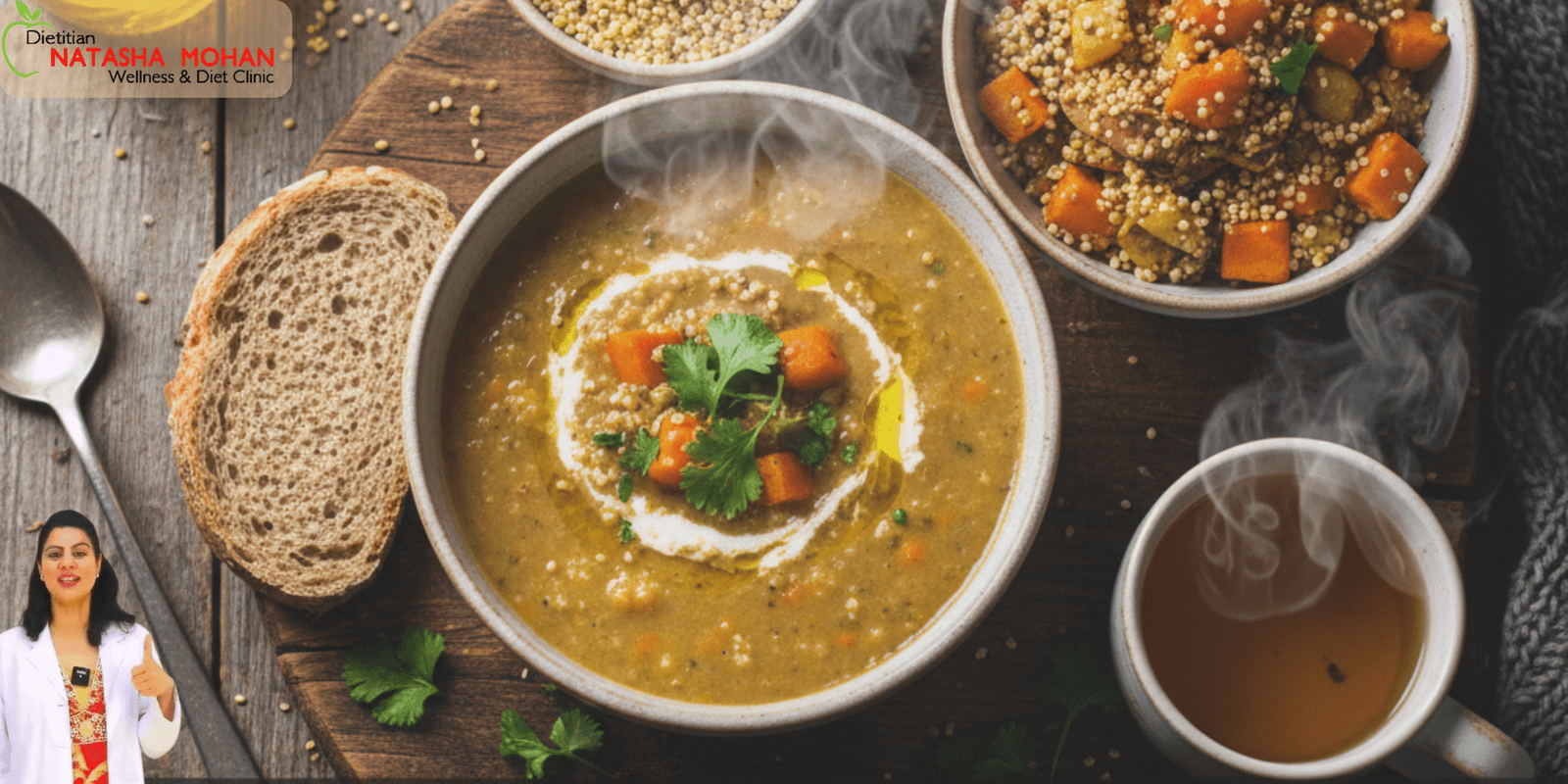
Nourishing the cold pulses millets and soups for stable glucose
Dt. Natasha Mohan

Dt. Natasha Mohan

Dietitian Natasha Mohan is one of the most influential and renowned nutritionist and dietitian, with over 3 Million Followers on YouTube and 200+ Million Views and with 10+ Years of Experience. Dietitian Natasha Mohan is a transformation expert, Motivational Speaker and Lifestyle Expert. She has touched million of lives. She specializes in Therapeutic Diets Like, PCOS/PCOD, Thyroid, Diabetes, Cholesterol, Blood pressure, and other lifestyle disorder.

Table of Contents

Nourishing the cold pulses millets and soups for stable glucose

Winter foods that keep your glucose steady

Winter often brings sudden drop of activity levels, stronger cravings and sharp hunger which can make your blood sugar level hard to manage. Cold weather also affects metabolic and digestion which is why many people experience unexpected abdomen pain and glucose spikes during winter season.
To stay nourished with balanced nutrients body needs warmer and protein rich and fiber dense food which provide steady energy and there some winter special food like pulses, millet and winter soups which play powerful role to keep your body ready for season transition.

Why winter affect your sugar levels

Winter creates hindrance in blood sugar management. Cold weather shift naturally changes the body functions from how to burn energy to how often to move.

  1. Lower Physical Activity
    Cold weather often reduces outdoor movement and exercise. With less activity your body doesn’t use glucose in effective way which lead to higher blood sugar readings.
  2. Increases Cravings For Comfort Foods
    When we enter under the blanket we become like grizzly bear where we desire for warmth with parathas, sweets, and fried snacks which digest quickly and raise glucose level.
  3. Hormonal Changes And Stress
    Shorter days with lower sunlight affect our mood related to hormones and increase of winter also stress can raise cortisol level which directly impacts on blood sugar.
  4. Dehydration And Dry Weather
    People always tend to drink less water in cold weather which cause mild dehydration that concentrates glucose in the bloodstream causing reading high.

Why protein matters for stable winter glucose

We need every nutrient from macro to micro in every situation, but protein become especially important during winter which keep our body warmth and energetic. Unlike fast digesting carbs where protein breaks down slowly prevent sudden hunger spikes which drops in blood sugar.

  • Slows Down Sugar Absorption
    Protein mix with other carbohydrates which helps to keep steady release of glucose into the bloodstream by keeping your sugar levels more stable after meals.
  • Keep You Full For Longer
    Winter hunger can hit harder but protein rich food reduces the craving of unhealthy snacks that we always want while resting under the warm blanket especially in evening.
  • Supports Muscle Health
    With lower physical activity in winter that you need to maintain muscle mass which keep your body use glucose efficiently.
  • Strengthens Immunity
    Protein provides good amount of essential amino acids that immune cells which makes winter infections easier to fight off.

Why Pulses matter in winter

Pulses are most nourishing food that is become important part of winter diet especially if you want to steady energy and stable glucose levels. Which warm grounding rich in plant protein and loaded with fiber making them perfect for cold weather eating.

  1. High In Protein
    Pulses like moong dal, masoor dal, chana dal, rajma and chole provide slow digestion and protein regulate blood sugar which keep satisfied your hunger for longer time.
  2. Low In Glycaemic Index
    Most pulses have natural low Gi meaning slow release of glucose that is ideal for people for blood sugar fluctuation who want to a balance their sugar during winter.
  3. Versatile And Easy To Digest
    Moong dal in particularly light soothing that is gentle for stomach make it great for healing from illness and dealing with any digestive issue in winter like bloating, acidity and so on.

Millets winter superfood your glucose will love

Millets fits perfectly for winter, and this is ancient grain which are grounding, warm comforting but also incredibly powerful for blood sugar balance. If you want stable glucose, steady energy the is perfect blend for winter chilliness.

  • Perfec For Diabetes & Weight Management
    Millet are low GI food which control appetite that reduce cravings that maintain steady glucose making them one of the smartest winter carbs to choose.
  • Naturally Warming According To Ayurveda
    Ayurveda considered millet is warming category which means they can stimulate digestion, improve metabolism keep the body comfortable in cold weather during winter digestive fire naturally slows down.

Soups warm comforting & perfect for glucose stability

Having bowl of hot soups in winter feels nothing better during this cold day and the best part is that soups can be incredibly supporting for blood sugar balance light and hydrating easy to digest where you warm the body from inside while giving you steady nourishment.
Soups are especially helpful for winter when the digestive system slows down during our stomach craving grow stronger and a well-prepared soup can keep you energized and satisfied without causing glucose spikes.

Best ingredient to add for better glucose balance

The right ingredients can turn a simple winter dish into powerful glucose balancing meal. We all know Indian spices and vegetables are naturally warming digestion friendly support good antioxidants that support stable blood sugar.

  • Ginger
  • Garlic
  • Cumin
  • Turmeric
  • Black Pepper
  • Leafy Greens
  • Lentils
  • Millets

Because metabolism slows winter that making our body more sensitive to heavy food and more prone to glucose spikes.

Of course, pulses like moong dal, masoor and chana dal gives high protein and fiber that gives slow and steady energy to work our organ efficiently.

Yes, when it made right clear broths and lentil bases soups are low in calories, hydrating which is high in volume but avoid cream-heavy or starchy soups which can be calorie dense and spike glucose.

Generally, yes, when you want to control glucose then yes, cream and heavy fats increase calories and may slow down digestion in way that disrupts appetite signals.

For glucose control individuals it is better to avoid i know it is warmth and give energy, but it is concentrated sugar, and overconsumption raises post meal glucose.

Our Recipes

Breakfast Recipes

Breakfast Recipes

Breakfast Recipes

Breakfast Recipes